AI Triage: Turn Waiting Time into Better Veterinary Visits
Every veterinary clinic has the same hidden bottleneck: the customer is already there, the pet is already waiting, and the doctor still has to spend the first part of the consult pulling the story together.
What started yesterday? What changed today? Is the pet eating? Drinking? Urinating? Vomiting? Any medications? Any toxin exposure? Did this happen before? Is the owner worried about something specific?
Those questions matter. They also take time. And in a busy clinic, they are easy to ask inconsistently, especially when reception is checking people in, technicians are moving between rooms, and doctors are trying to stay on schedule.
Übik AI Triage turns that waiting time into useful clinical context.
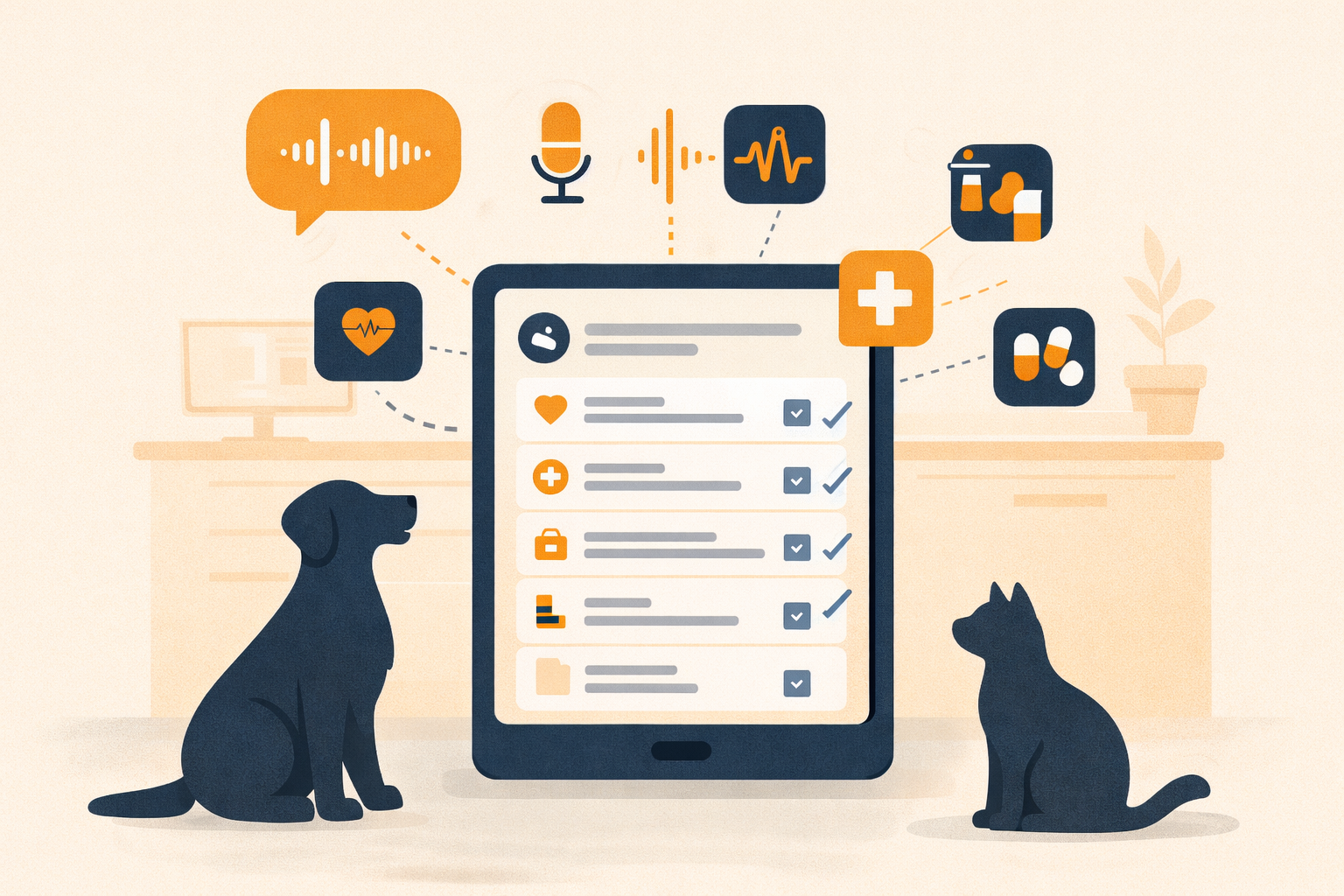
Before the appointment, reception can send the visit to a paired tablet. The owner answers a guided, graph-driven intake while they are already waiting. By the time the patient reaches the doctor or technician, Übik has organized the owner-reported story into a non-diagnostic summary, source-attributed facts, transcript context, and a visible question path for staff review.
The result is not just "AI asks questions." The result is a better visit.
The Three Wins
AI Triage is designed around three practical wins for a clinic.
- Better doctors: doctors see clearer patterns because intake is complete and consistent.
- Faster doctors: the clinic uses the customer's waiting time instead of the doctor's exam-room time.
- More thorough clinics: the workflow catches details that are easy to miss when everyone is busy.
These are not abstract AI benefits. They are operational benefits that show up in the appointment flow.
Win 1: Better Doctors See the Pattern Sooner
Doctors are already good at clinical reasoning. What slows them down is not intelligence; it is incomplete context.
If every appointment begins with a different intake style, the doctor has to reconstruct the story from fragments. One visit has timing but no appetite history. Another has symptoms but no exposure question. Another has a vague "not eating" note without water intake, vomiting, diarrhea, urination, energy, medications, or the owner's main concern.
AI Triage makes the intake more consistent.
The graph asks approved questions, tracks what has already been answered, skips what is no longer useful, and records owner-reported facts in a structured way. That means the doctor can open the chart and see patterns earlier:
- onset and progression;
- appetite, water, urine, stool, vomiting, and energy changes;
- possible exposure, trauma, medications, or treatment already attempted;
- branch-specific context when symptoms point toward respiratory, gastrointestinal, urinary, dermatology, pain, behavior, preventive care, or other common visit patterns;
- uncertain or corrected answers that deserve follow-up.
The doctor still makes the medical judgment. AI Triage simply gives the doctor a cleaner starting point.
That is how it helps make better doctors: not by replacing expertise, but by giving expertise a more complete pattern to work from.
Win 2: Faster Doctors Use Time the Clinic Already Has
The most expensive minutes in a veterinary clinic are often doctor minutes.
A customer may sit in the waiting area for five, ten, or fifteen minutes before the visit starts. Without a structured intake workflow, that time is mostly unused. Then the doctor or technician spends the first part of the appointment collecting basic history that could have been gathered while the owner was already waiting.
AI Triage moves that work earlier.
If a clinic saves even five minutes of doctor or technician history-taking on a typical consult, that adds up quickly:
- 10 appointments can reclaim roughly 50 minutes of clinical team time.
- 20 appointments can reclaim more than an hour and a half.
- 30 appointments can reclaim two and a half hours.
The exact savings depend on the clinic, appointment type, and how much history is needed. But the principle is simple: the owner has free waiting time, and the doctor does not.
Using that waiting time means doctors can walk into the room with a cleaner picture, technicians can prepare with better context, and the visit can move faster without making it feel rushed.
Faster does not mean less careful. It means the clinic stops wasting the best available intake window.
Win 3: Thoroughness Catches What Busy Teams Miss
Most missed intake details are not missed because the team does not care. They are missed because the clinic is busy.
Someone asks about vomiting but forgets water intake. Someone captures appetite but misses toxin exposure. Someone records "limping" but not when it started or whether it is getting worse. Someone hears "straining to pee" and knows it matters, but the note does not preserve the full owner wording.
AI Triage gives the clinic a consistent safety net.
The tablet can collect the full owner answer, extract structured facts, preserve the transcript context, and show unanswered or uncertain items. If the owner describes a possible emergency, the session can mark the appointment for staff review while continuing to collect quick triage details that help the team see the patient faster.
That matters because thorough intake is not just about having more words in the chart. It is about catching the small details that change urgency, preparation, and communication:
- "only a few drops" instead of "urine issue";
- "started after a new plant" instead of "vomiting";
- "not sure if he ate medication" instead of a blank exposure field;
- "she has been hiding and breathing faster" instead of "low energy";
- "this happened twice before" instead of a one-time symptom.
Those details are easy to lose in a rushed handoff. AI Triage helps preserve them.
Built for the Real Clinic Flow
AI Triage is not a separate chatbot floating outside the appointment.
It is built into the workflow clinics already use:
- Reception assigns the appointment from the appointment tools workflow.
- The tablet waits for the assigned patient and guides the owner through intake.
- Reception and Technician appointment lists show a CPU indicator beside waiting time: orange when AI Triage is pending, green when it is finished.
- Doctors and technicians review the summary from the appointment chart.
- The review card shows the non-diagnostic summary, owner-reported facts, transcript context, doctor feedback fields, and the collapsed question graph when the team wants to audit the path.
That makes AI Triage visible without adding another dashboard for the clinic to babysit.
The Clinical Boundary Is Clear
AI Triage is not a diagnosis tool. It does not prescribe. It does not rule things out. It does not replace the veterinarian.
Its job is intake:
- ask approved questions;
- capture owner-reported details;
- organize facts;
- preserve uncertainty;
- flag potential urgency for staff review;
- give the clinical team a better starting point.
The doctor remains the doctor. The technician remains the technician. The clinic team reviews the information before using it.
That boundary is important because good AI in a clinic should make the team stronger, not blur responsibility.
Why This Matters
AI Triage is one of those workflow changes that feels small at the front desk but compounds across the whole clinic.
Reception gets a simple way to start intake while the customer is waiting. Technicians get a cleaner handoff. Doctors get more complete patterns sooner. Owners feel heard before the appointment starts. The chart gets better context. The clinic catches more of the details that normally depend on memory, timing, and how busy the day is.
Better doctors. Faster doctors. More thorough clinics.
That is the point of Übik AI Triage.
Schedule a Free Demo or Send Us a Message
We'd love to show you how Übik can help your clinic turn waiting-room time into cleaner intake, faster appointments, and better medical context.
📞 WhatsApp: 1-612-383-6374 🌐 Website: goubik.com 📧 Email: [email protected] 👉 Or send us a message on Facebook