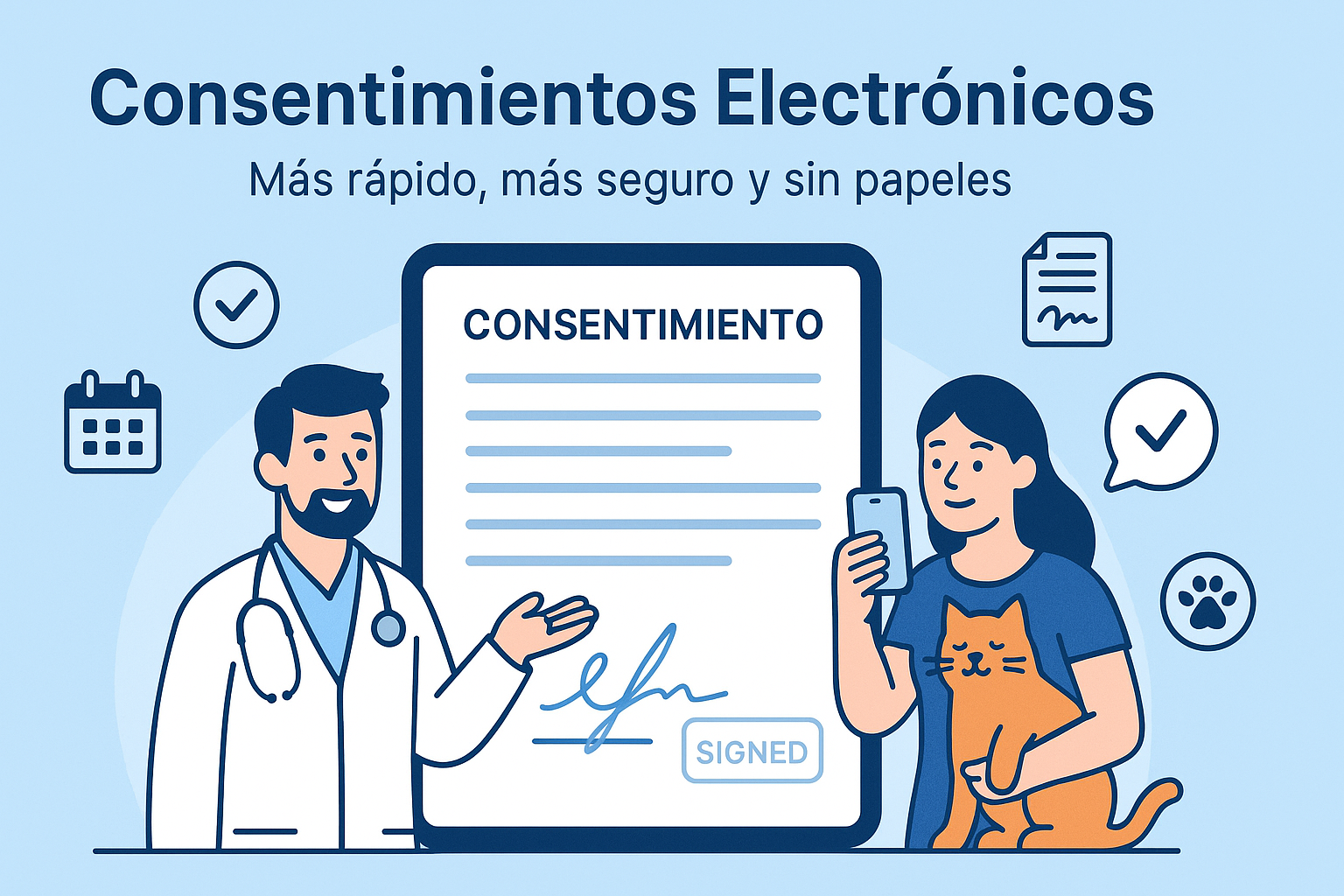
Electronic Waivers: Evidence to Support Your Clinic's Consent Records
If a customer challenges an authorization, the clinic needs to explain what was presented, what acceptance was recorded, and how that evidence is preserved. An image of a signature alone does not answer every question.
Übik helps support a waiver or consent form with a record linked to the appointment. Its value is giving the clinic evidence to support its position—not promising that every claim will be dismissed.
What Übik preserves and how it protects it
The customer opens the document link, reviews its contents, enters their name, draws their signature, and accepts. Übik preserves that copy's text, the captured name and signature, the date and time recorded by the system, and its links to the appointment, customer, and patient.
Übik cryptographically signs that record with a system integrity seal. Verification checks that the protected text and signing details match the sealed record. The workflow preserves the issued copy; a correction uses another document rather than rewriting the original. Integrity verification applies to records carrying that seal, not every historical copy.
The drawn signature records the customer's acceptance; Übik's seal protects the record's integrity. The seal alone does not establish who held the phone. It is not a SAT e.firma or a NOM-151 preservation certificate, and the saved date is not an independent trusted timestamp. It also does not certify clinical details displayed separately.
In the waiver view, Cryptographically sealed identifies a verified record. Open Seal details to review its reference and recorded times or Download verification evidence to preserve the electronic evidence. That file contains personal information: share it only with authorized recipients. A printed seal mark is a reference, not a substitute for verifying the electronic record.
How to respond to a dispute
If a customer says “I did not sign” or “that was not the text,” the clinic can organize its response as follows:
- Preserve the original. Open the copy associated with that appointment and avoid changing or replacing the evidence.
- Assemble the supporting record. Keep the signed copy and, with technical assistance where needed, preserve the electronic record and its seal verification. A printout helps someone read it but does not replace the digital evidence.
- Add context. Gather available messages and sending records, the recorded contact details, clinical notes, and staff accounts of how consent was obtained. Sending a link does not, by itself, identify the person who used it.
- Review the response with legal counsel and, where applicable, the clinic's insurer. The evidence can support the authorized text and recorded acceptance. Attribution of the signature and the scope of consent must be assessed alongside the rest of the record.
An initial response, without prejudging the complaint, might be:
We have preserved the text presented for authorization, the captured name and signature, and the recorded date. We will review that evidence alongside the communications and clinical record to address your concern.
What Mexican law recognizes
- Electronic consent. The Federal Civil Code, articles 1803 and 1834 bis, recognizes electronic expressions of consent and, in the circumstances it governs, requires information that remains intact, attributable, and available for later consultation.
- Electronic documents as evidence. In commercial matters, the Commercial Code, articles 89 bis, 93, and 1298-A, recognizes data messages and considers the reliability of their generation and preservation when assessing evidentiary weight.
These references do not automatically determine which law governs a particular case; state civil law and other applicable rules may also matter. A waiver is not blanket immunity. Where consumer law applies, article 90, sections II and III, of the Federal Consumer Protection Law restricts standard-form clauses that release or transfer a provider's civil liability.
The strongest defense starts before signing: lawyer-reviewed wording, explanations of risks and alternatives, identification of the person authorizing care, and a complete clinical record. Übik helps preserve evidence; the clinic remains responsible for the quality of consent and care.
Legal notice: This article is general information, not legal advice. Übik provides a technology tool; it does not undertake the clinic's legal defense or guarantee a clause's enforceability or the outcome of a dispute. To the extent permitted by law, Übik does not assume responsibility for waiver content or clinical decisions or acts. The clinic must obtain its own legal advice. This notice does not exclude obligations or liabilities that cannot lawfully be waived.