Which inventory strategy should I choose?
Compare Auto, EOQ, JIT and Manual, and learn why demand, shelf life, costs and review holds matter.
Reviewed against current application source. Screenshots use fictional local training data.
Pick a purchasing strategy for the item
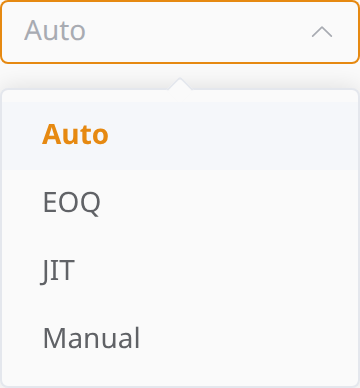
#Auto, EOQ, JIT and Manual control how replenishment is planned. They do not define the physical count, post a receipt or authorize an order. Choose from the item’s demand, shelf life, supplier lead time, storage limits and quality of saved history. A strategy is a purchasing policy, not a way to force today’s stock balance.
Review the inputs first
#Save the inventory item, link its supplier, and review Unit, package size and purchase conversion. Review clinic policy, current stock, active orders and statistics. A high number in a cost field does not make a strategy safer; use the clinic’s approved costs and limits.
Which strategy should I choose, and why?
#| Strategy | When it fits | What to review |
|---|---|---|
| Auto | Use the app’s perishable/nonperishable rule. | Auto chooses JIT when Perishable is on; otherwise EOQ. It does not learn a different strategy by itself. |
| JIT | Short shelf life, limited storage or frequent dependable deliveries. | Near-term demand horizon, lead time and safety stock. Supplier delays still matter. |
| EOQ | Stable, usable demand for stock that can be held economically. | Positive demand, ordering cost and holding cost. Compare pack rounding, expiry and capacity. |
| Manual | Staff make the purchasing decision, or demand/cost evidence is not reliable enough. | Excluded from generated purchase suggestions; inventory tracking still works. |
Configure and review the saved strategy
#- Open Inventory → Manage, find the item, then Go to → Edit. Planning is available after the item is saved.
- Choose the strategy and review Perishable, minimum/maximum stock, supplier lead time and any item override. Blank lead-time override inherits; zero means an explicit zero days.
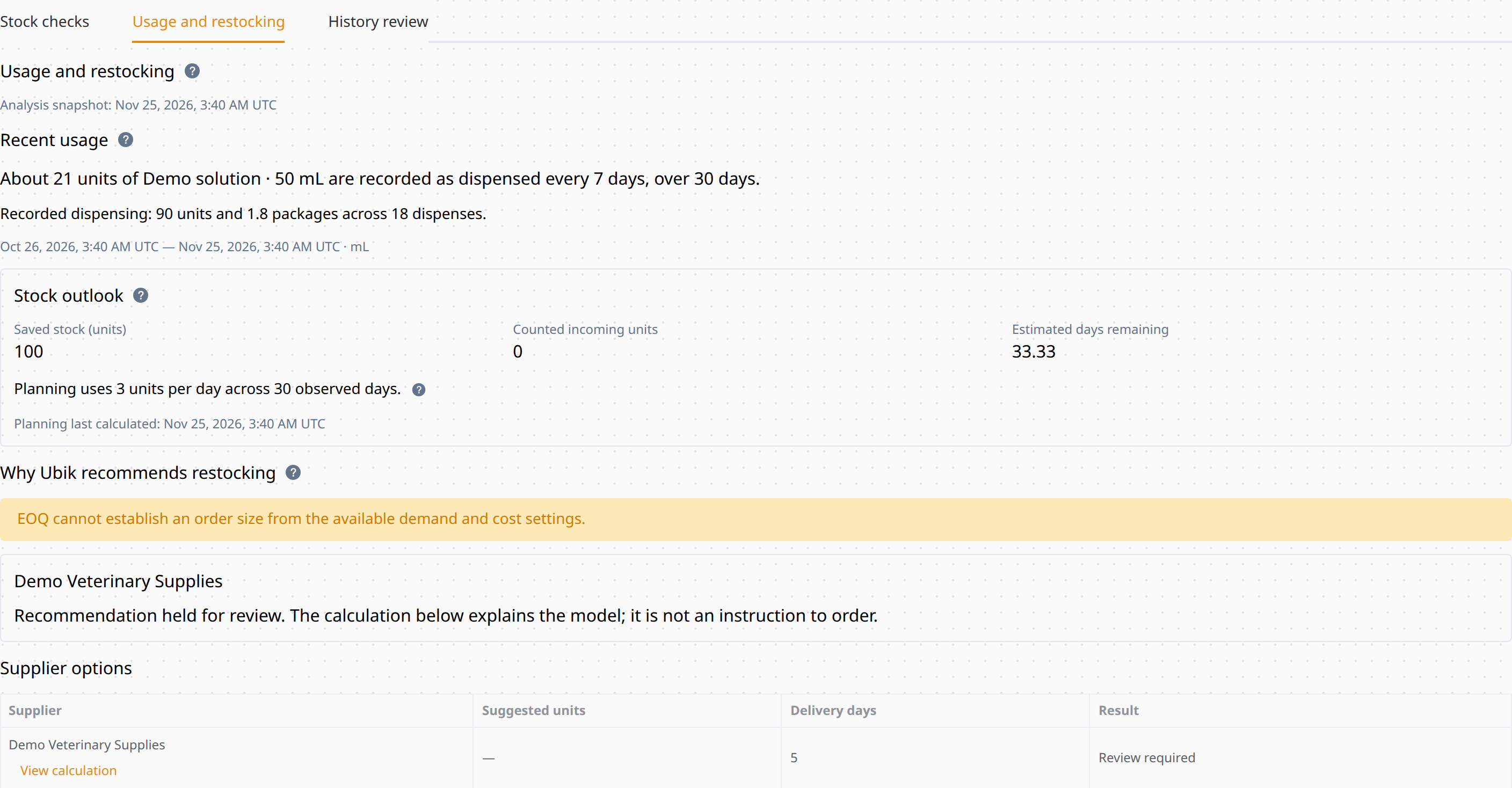
- Save, then open Analyze → Usage and restocking. Read the saved demand and calculation inputs, suggested amount and holds before ordering.
Read the calculation and its limits
#JIT covers the configured horizon plus safety stock, less saved stock and counted incoming orders. EOQ balances ordering and holding cost; holding cost depends on unit cost and the holding-cost percentage. Minimums, maximum capacity, supplier minimums and package/purchase-unit rounding can change the final amount.
The read-only explanation can hold a recommendation for missing inputs, stale statistics, fewer than 14 observed days, invalid demand/costs, changed settings or stock/history discrepancies. A model amount during a hold is not an instruction to buy. Refresh and resolve the stated reason; do not fabricate usage or reset History.
Compare two fictional items
#A frequently delivered perishable product may fit JIT or Auto with Perishable enabled. A shelf-stable consumable with steady demand and reviewed costs may fit EOQ. A new rarely used item without usable history may need Manual and staff review. These are starting points for clinic policy, not guarantees against shortages or waste.
Common mistakes
#- Choosing Auto without reviewing Perishable or expecting Manual to stop stock tracking.
- Treating a recommendation as a physical count or ignoring active purchase orders.
- Changing costs or limits merely to remove a hold.
When a suggestion is missing or implausible
#Review supplier links, strategy, history window, demand, costs, stock/lot/location evidence and existing orders with the Inventory Lead. Usage-review holds and nightly suggestion generation are related but not identical rules. Preserve the displayed inputs and reason when reporting an unexplained result.
Check your understanding
#Ready to apply this lesson
#Saved only in this browser. This is a personal practice checklist, not a clinic training record.
Related guides
- Set up suppliers for purchase-order recommendations
- Plan replenishment and manage purchase orders
- Why inventory counts do not add up: read History
- Public manual
Source: Which inventory strategy should I choose? · Revision 2